Food & Family
Cooking the Recipes We Were Handed
Family recipes are rarely written down. Here is a gentle way to record them before the details go quiet.
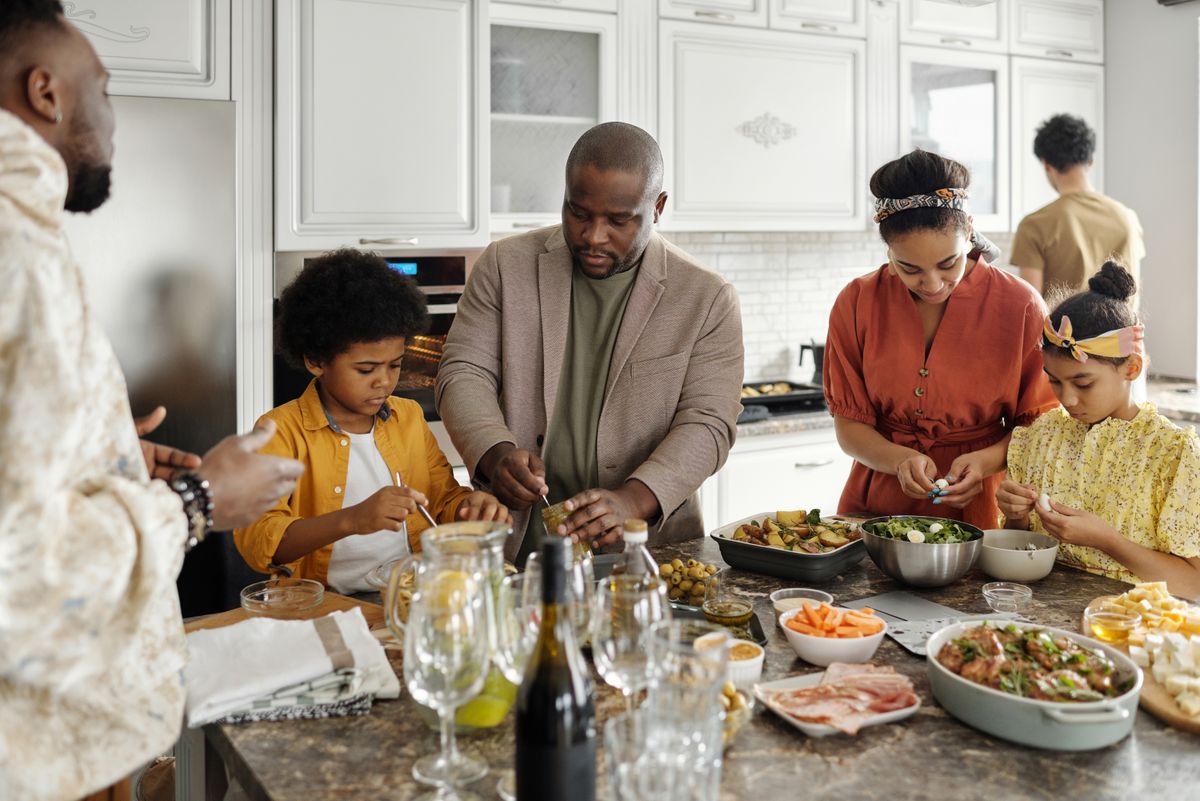
Ask an elder for a recipe and you will often get a method instead of a measurement. Enough. Until it looks right. The way your grandmother did it. Those instructions are precise to the person giving them and nearly impossible to inherit without being in the kitchen.
Cook it together before you write it down
The fastest way to record a family recipe is to make it alongside the person who knows it, with a notebook open on the counter. Write the order of operations first; quantities can be estimated on a second pass.
Record the why, not only the what
Why that pot. Why the heat comes down at that moment. Why it is made in that season, or for that person, or on that particular Sunday. The reasoning is the part that disappears first.
Let the meal be more than fuel
We write about food without ranking it. No good foods and bad foods, no earning dessert, no moral math at the table. A meal can be nourishing, celebratory, ordinary, or all three at once, and a food journal should have room for every version.
A place to keep it
The Food Journal has pages for family recipes and cultural foods for exactly this reason — so that the version in your head has somewhere to live besides your memory.
This article is general wellness education. It is not medical advice and is not intended to diagnose, treat, cure, or prevent any disease. Talk with a qualified healthcare professional about your own situation.